

While penis enlargement has been thrust into the spotlight recently, it’s been around for a while. One of the most reliable, effective treatments involves injecting hyaluronic acid filler beneath the skin of the penis. And while the procedure basically stays the same from men who are circumcised and uncircumcised, there are some differences.
The bottom line? Anatomy plays a role in any aesthetic procedure, and penile filler treatments are no exception. However, when it comes to penis enlargement using hyaluronic acid (HA) filler, foreskin length does not prevent treatment, nor does it inherently limit results.
What it may influence is technique, planning, and the early healing phase. Here’s what that actually means.
How Hyaluronic Acid Penis Enlargement Works
Hyaluronic acid is a naturally occurring substance in the body that binds water and creates volume. In penile girth enhancement procedures, a medical-grade HA filler is strategically placed beneath the skin of the shaft to increase circumference. This treatment increases mostly girth of the penis and allows for customized volume depending on a patient’s goals. Results last between twelve and twenty-four months depending on the specific product used and individual metabolism.
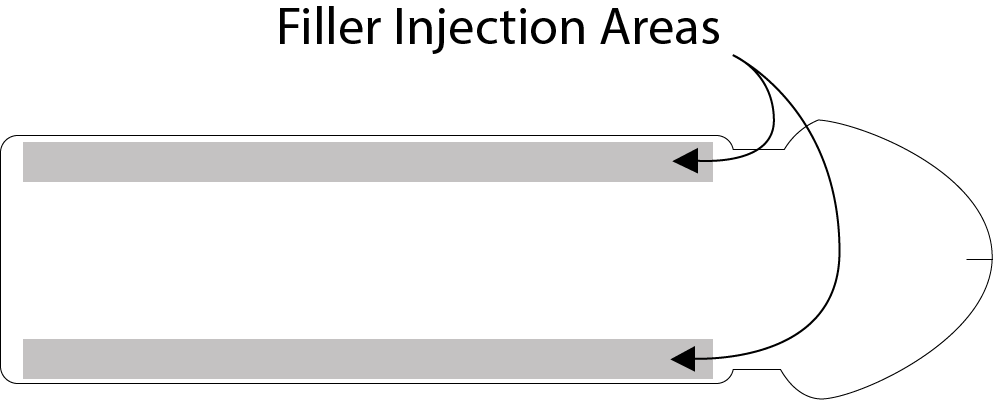
Importantly, the filler is placed within the subcutaneous layer of the shaft — not inside the erectile chambers and not inside the foreskin itself. Because the material sits beneath the skin, what matters most from an anatomical standpoint is skin mobility and elasticity rather than foreskin length alone.
Understanding Foreskin Anatomy
The foreskin, medically known as the prepuce, is a retractable sleeve of skin that covers the glans in uncircumcised men. Its appearance and length vary significantly. Some men have minimal flaccid coverage, while others have complete coverage or even slight overhang when flaccid. In some cases, the foreskin retracts easily and loosely; in others, it may be somewhat tighter.
All of these variations fall within the spectrum of normal anatomy.
From a clinical standpoint, the more relevant considerations are:
- Whether the foreskin retracts comfortably
- Whether the skin is elastic
- How mobile the shaft skin is overall.
Foreskin length by itself is rarely the determining factor in candidacy.